
Maybe I was feeling a little cocky; maybe a little too smug. I thought, “my homemade pizza is getting consistently good, if not GREAT!” So, on July 23, I decided to:
- bake two loaves of whole wheat sourdough bread
- made two seeded sourdough doughs to bake later
- AND attempt my first homemade pasta (GPA #1).
The whole wheat doughs had sat in the refrigerator for two days, but upon baking, the results were fantastic!
This further drove my cockiness. “HOW HARD CAN HOMEMADE PASTA BE?” I thought.

The Dough
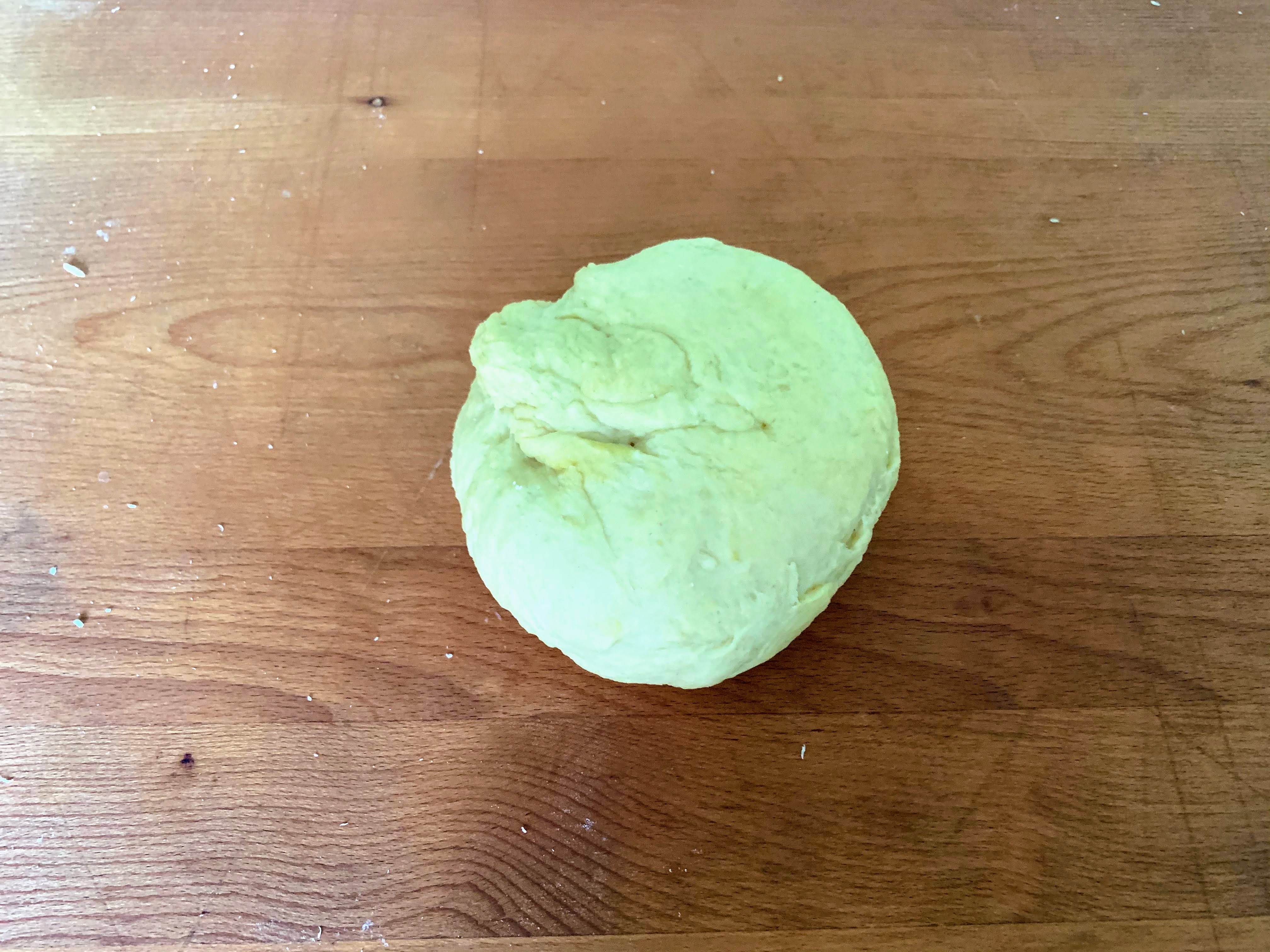
- Two cups of All Purpose flour (I decided against the expensive 00 in case I failed!)
- 2 eggs
- a splash of olive oil
- a cupped hand of salt
- mix in a bowl
- knead by hand on my bread board
- let sit for 4 hours or so
Making the Pasta
I had been waiting for this for awhile! We’ve had my parents crank pasta machine for about 20 years in the basement. This unit is an original Vitantonio made in Cleveland. I would guess that this is over 70 years old! Recently, I had cleaned and lubricated all the parts, and it seemed in very good working order!
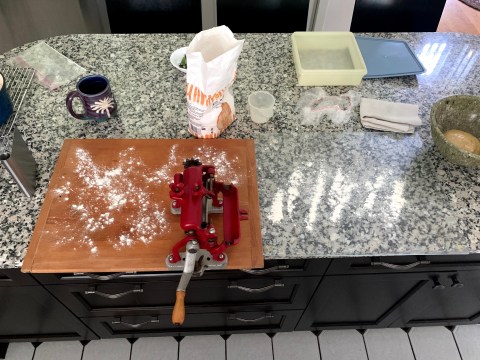

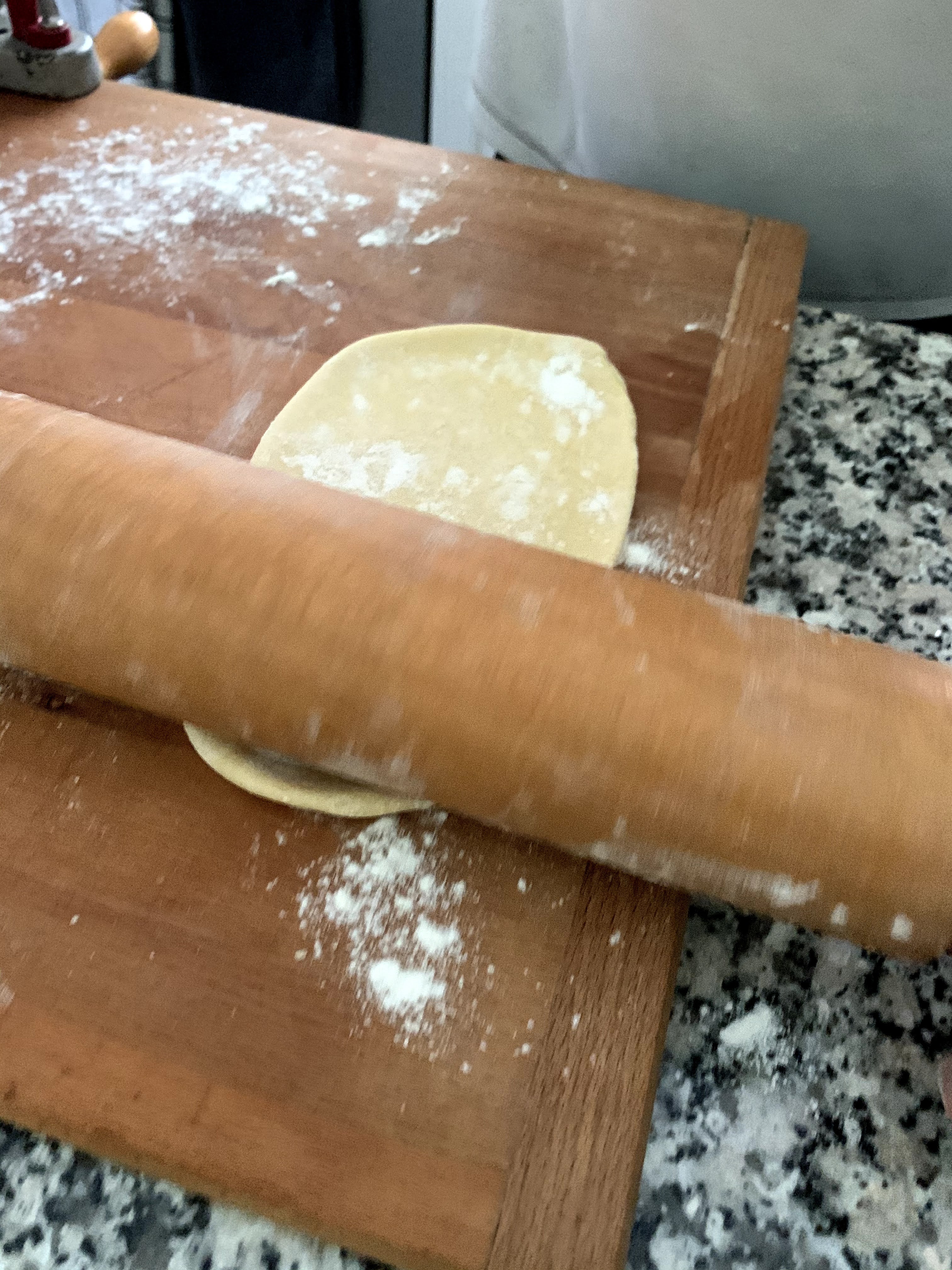
I set up my workstation with the pasta maker attached to my wood board, cut the dough ball into 4 and rolled out the first portion with a rolling pin (unfortunately, the rolling pin plastic bushing broke…big bummer since this was previously my wife’s mother’s 😦 but it still worked) so that it would fit into the pasta maker.
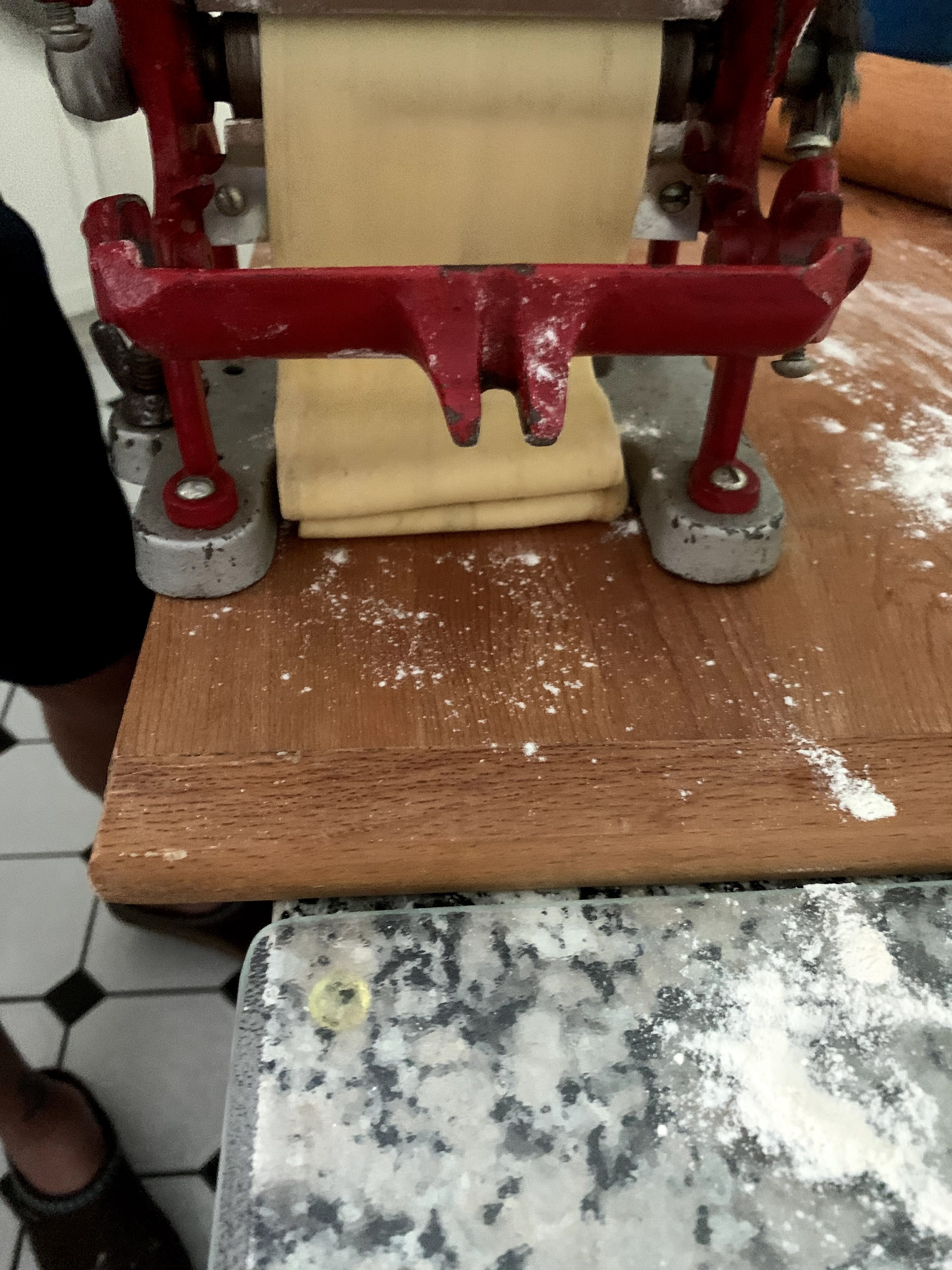

The next step was to thin the dough down (top, left picture above). Since it hadn’t been used in many, many years, I thought I’d use this first dough chunk to clean the unit and learn. This unit does not have a thickness dial like the newer ones.
So I ran the dough through it 8 – 10 times while tightening down the “thickness nut” with each success pass. The dough was getting nice, thin, and transparent although a little dirty because it was picking up dirt and the dirty olive oil that I had used to lubricate it.
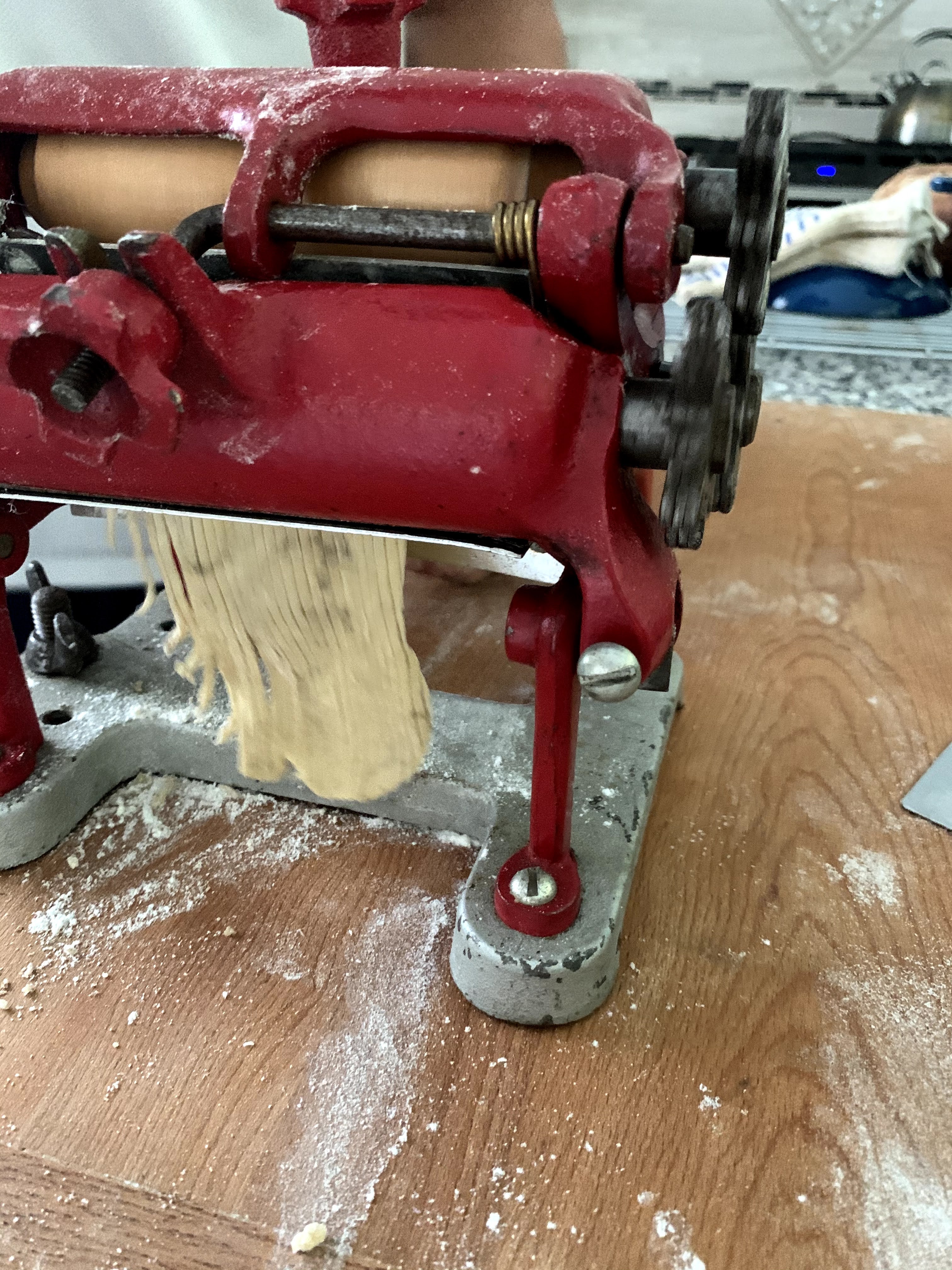
We then tried to make pasta with the fettuccine cutting die (middle picture above). It didn’t work too well! It got caught on one side and did not cut. I tightened down the “cutting nut”, but then the dough didn’t pass through at all.
We switched to the spaghetti cutting die and ended up with a very nice cut (bottom, right picture above)…but, I didn’t want spaghetti. I wanted fettuccine because it would work better with the Cacio e Pepe sauce that I’d planned.
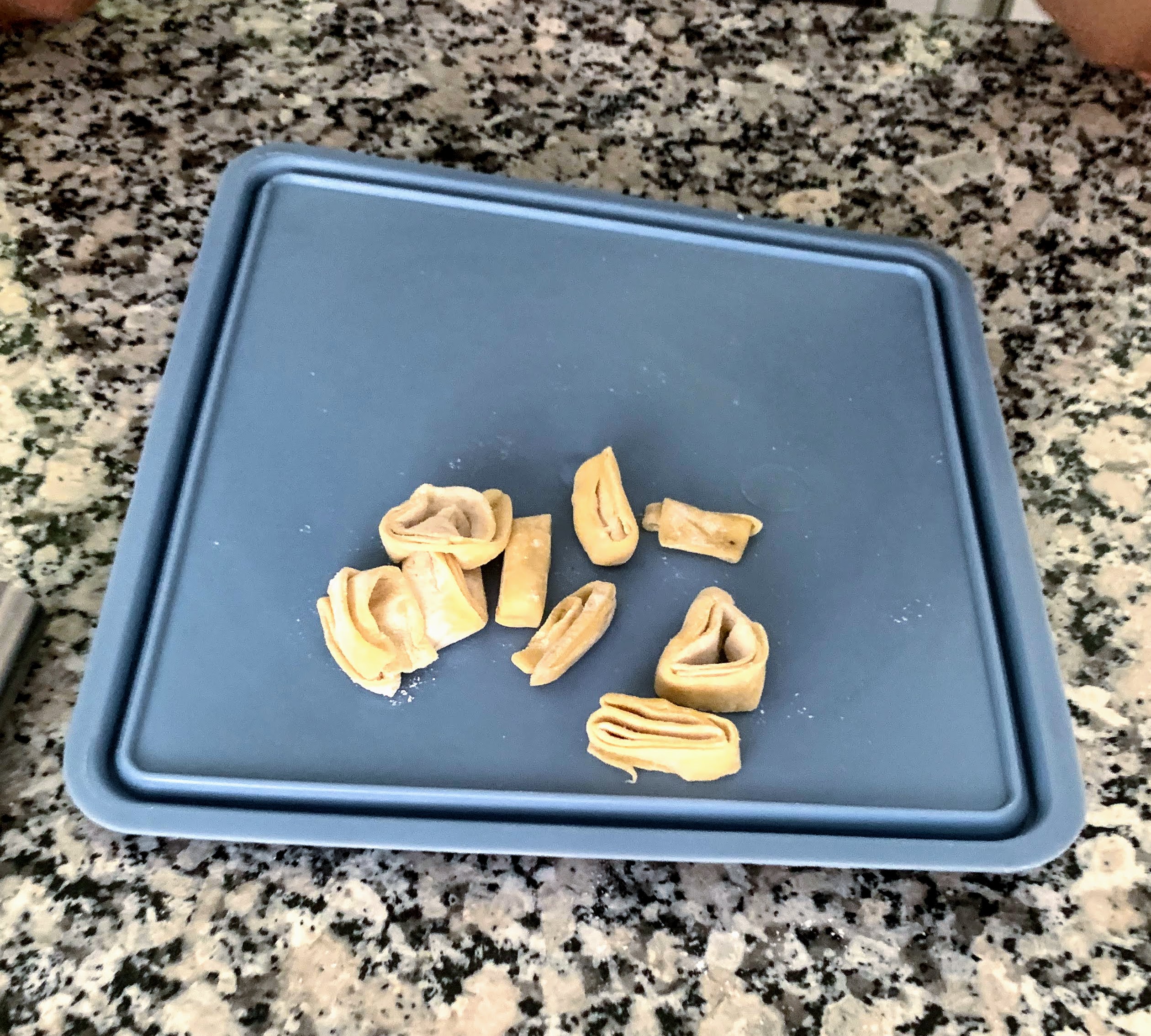
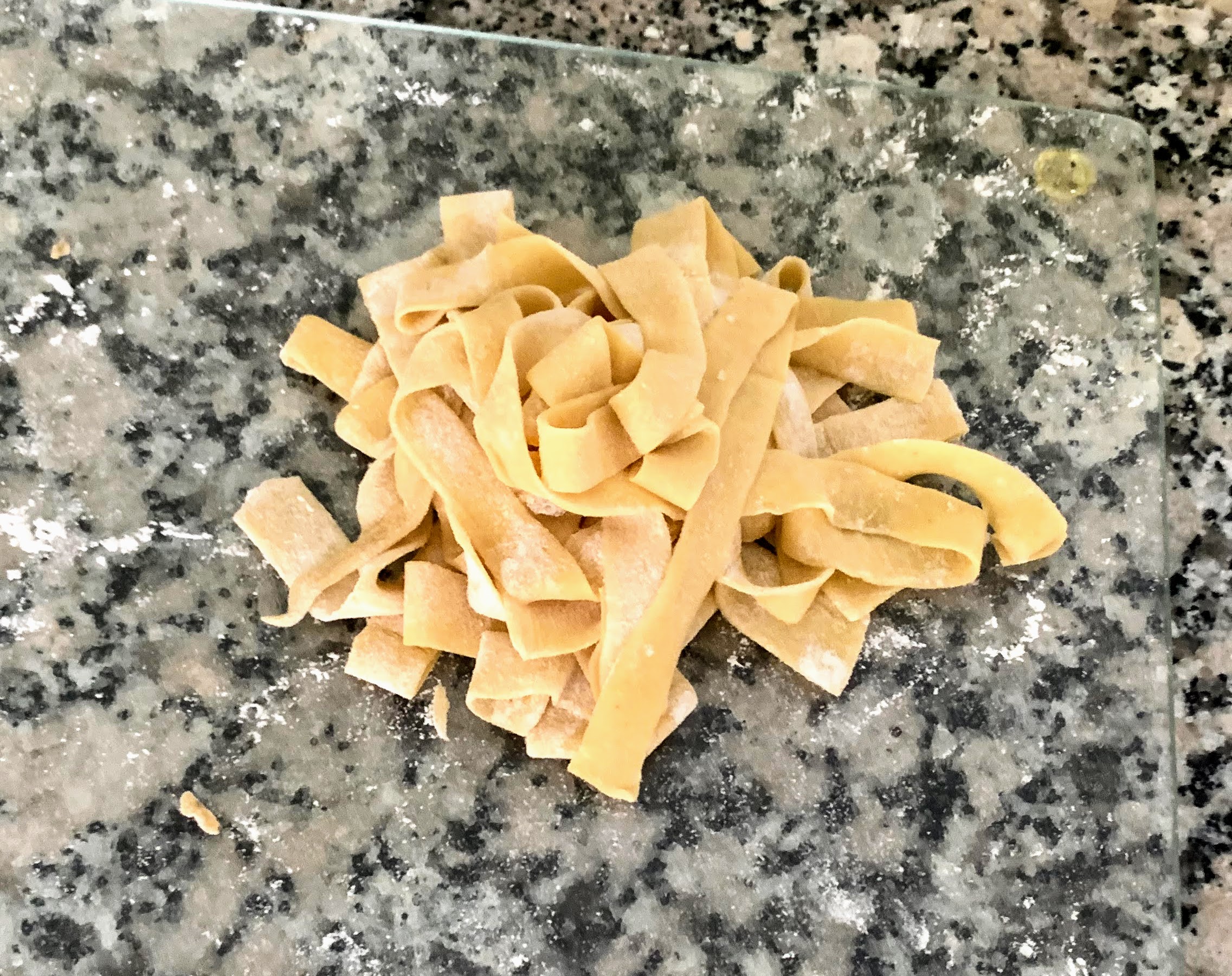
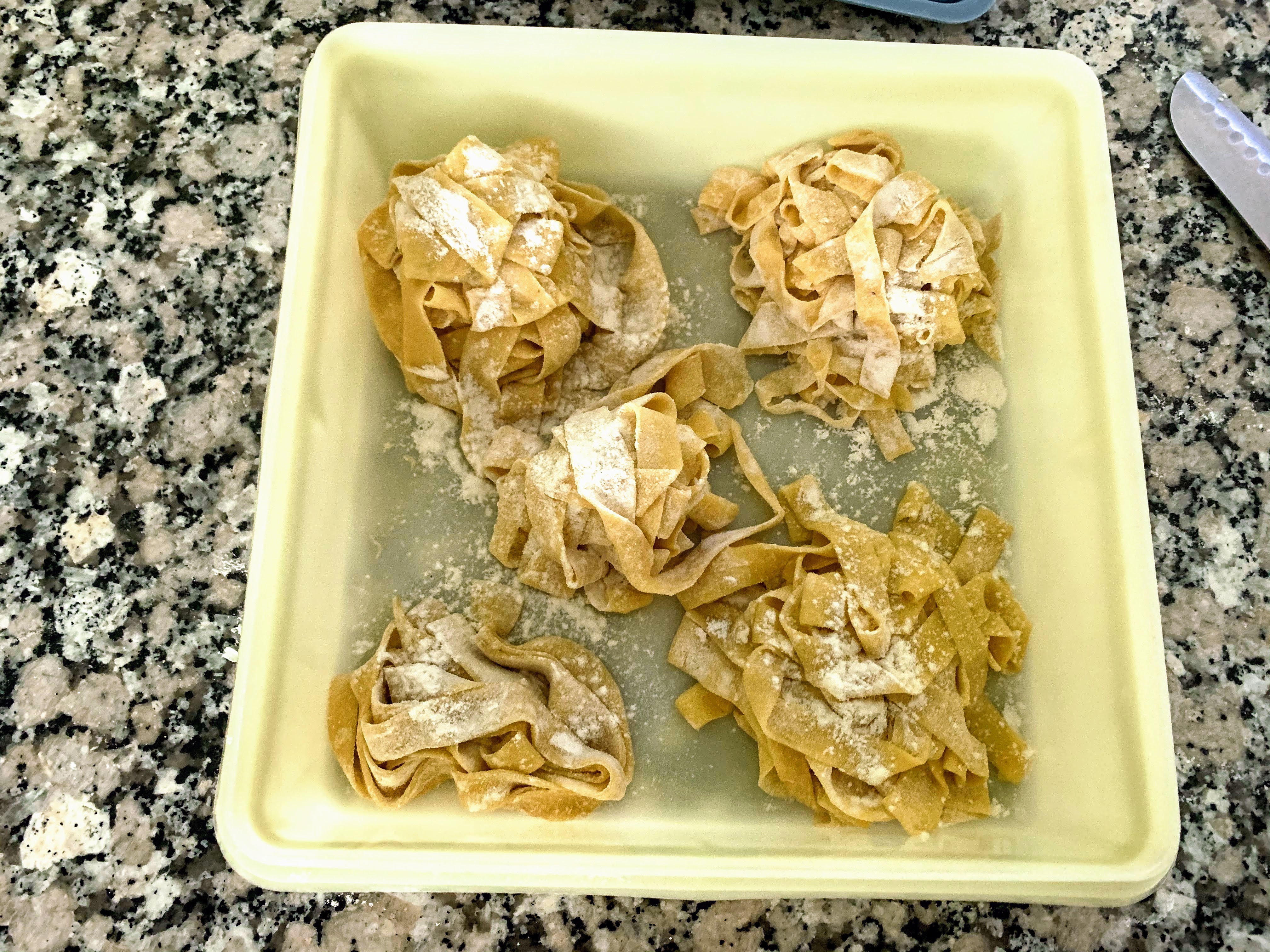
So, I decided to roll and thin the dough with the machine and then cut the thinned dough into fettuccine by hand. This resulted in 5 good “balls” of pasta that we placed in a partially covered Tupperware and adjacent to the stove top to rest for a couple of hours before I used it to cook dinner.
WHY DID I DO THAT? I WAS BAKING BREAD IN THE STOVE!!!!!
The Sauce
As mentioned above, I chose to do a simple cheese cream sauce called Cacio e Pepe (Cheese and Black Pepper). This sauce consists of:
- freshly ground black pepper
- freshly ground parmigian
- butter
- olive oil
- pasta water
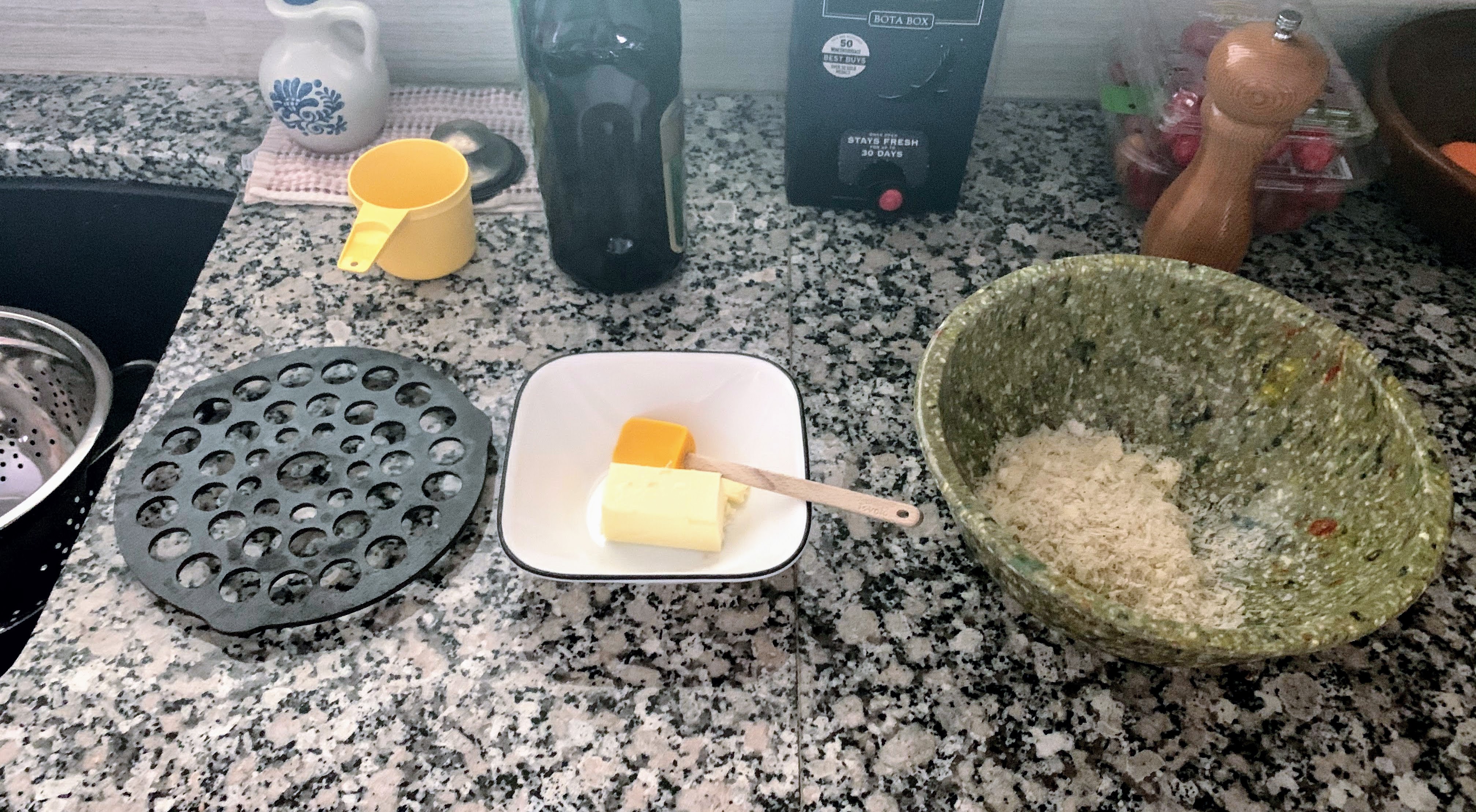
I got the sauce workstation set up and had the water boiling on the stove.
BUT, do you remember me putting the pasta next to the stove top? Well, when I grabbed a “ball” of fettuccine, the individual cut strands had formed into a soft blob of dough with no discernible strands of pasta…YIKES! My guess that it was too hot near the stove between the baking bread and boiling water.
Thinking fast, we grabbed the 5 piles of moosh, rolled them out by hand, and re-cut the pasta into reconstituted strands! What a cluster!
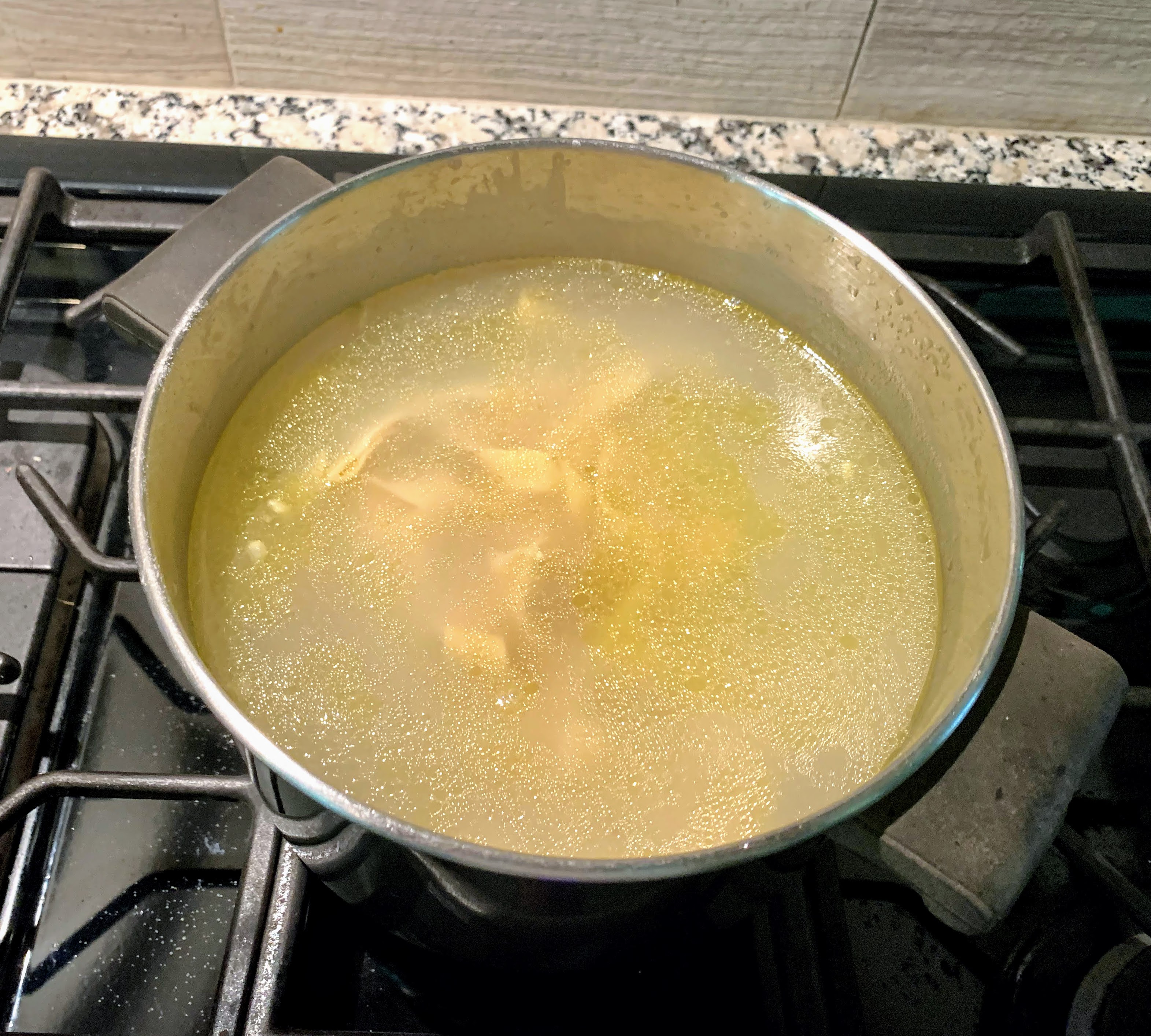
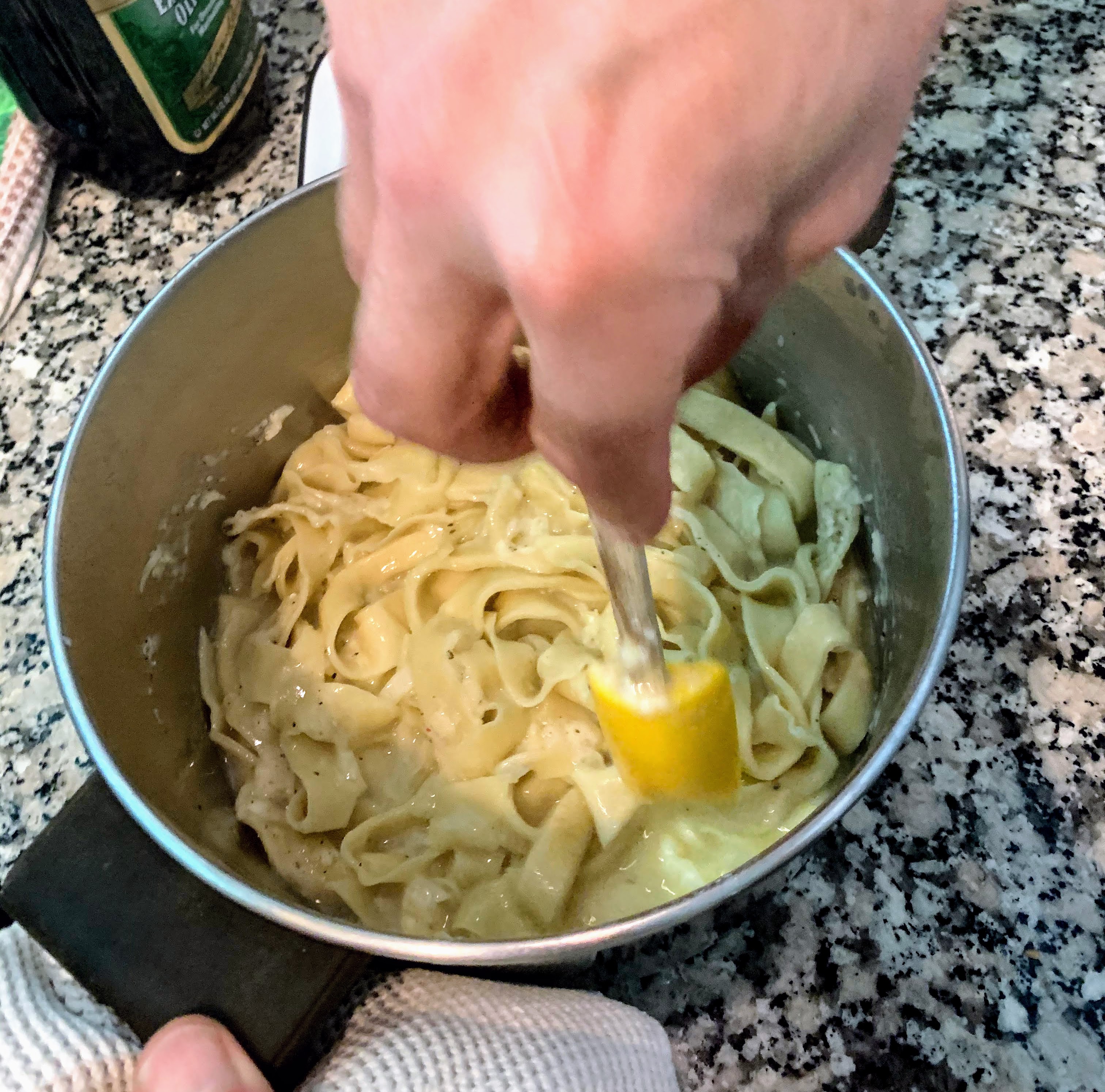
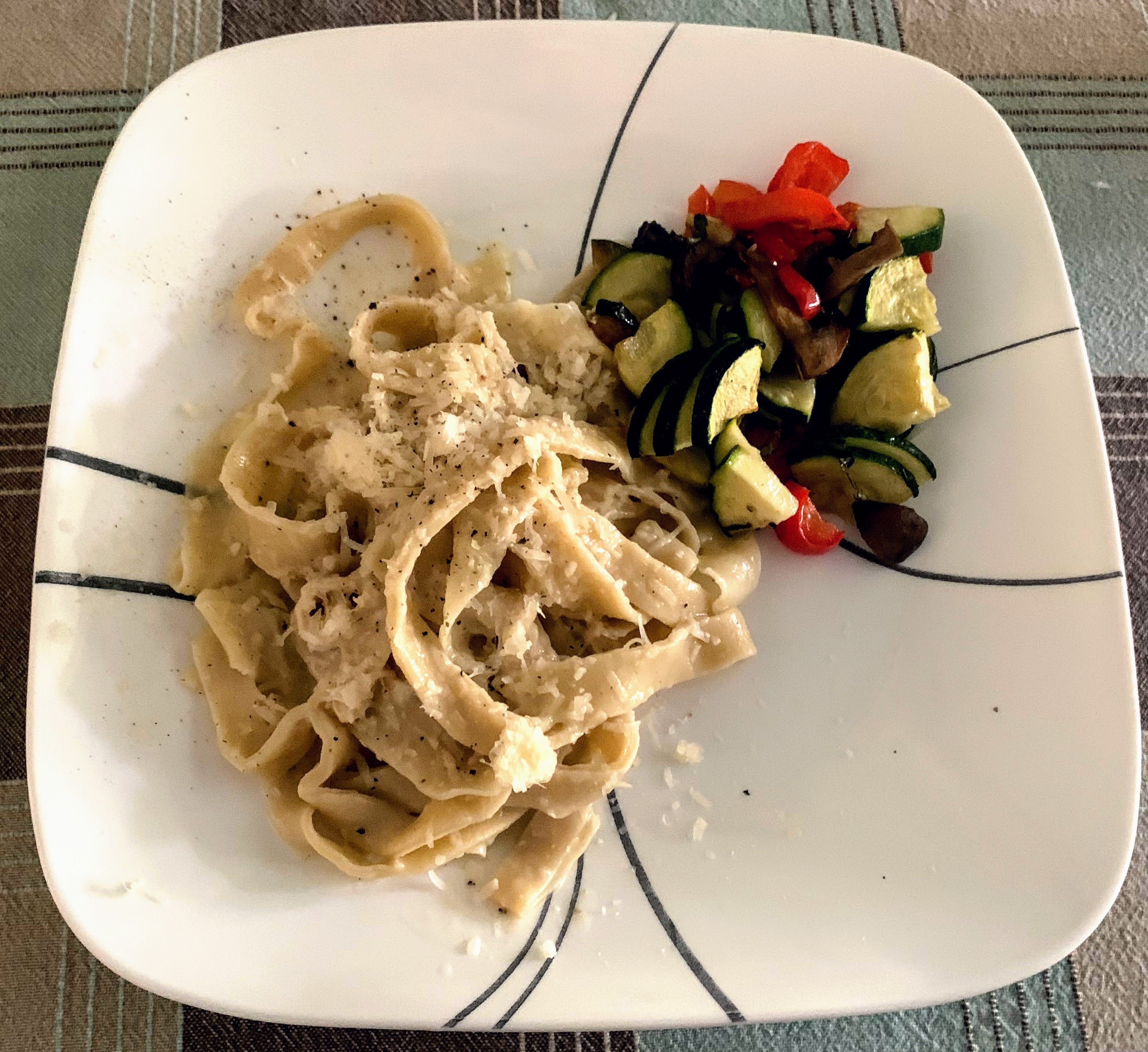
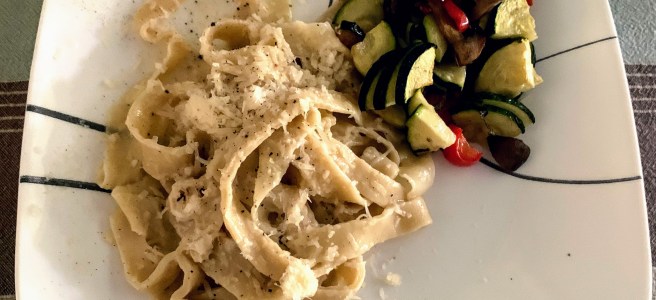
Despite the cluster, the reconstituted fettuccine was Pretty, Pretty Good! Since we were in a rush, the remade pasta was of varying thicknesses. The ticker (as Grandpa Tony would say) ones were a little tough but tasty, while the thin ones were very pleasant!
The sauce was outstanding. I could’ve used a little less cheese or a little more water to thin it out just a little. It turned out to have a thickness of an Alfredo Sauce while I had planned on something thinner and lighter.
Great first attempt! Can’t wait to try it again! Making pasta is harder than I thought! We’ll probably not use the cutting dies unless we want to make spaghetti, and we’ll wait until near the end to make the pasta instead of letting it sit around. Our other option is to try a drying rack or to refrigerate.
We’ll figure it out!


You must be logged in to post a comment.